close

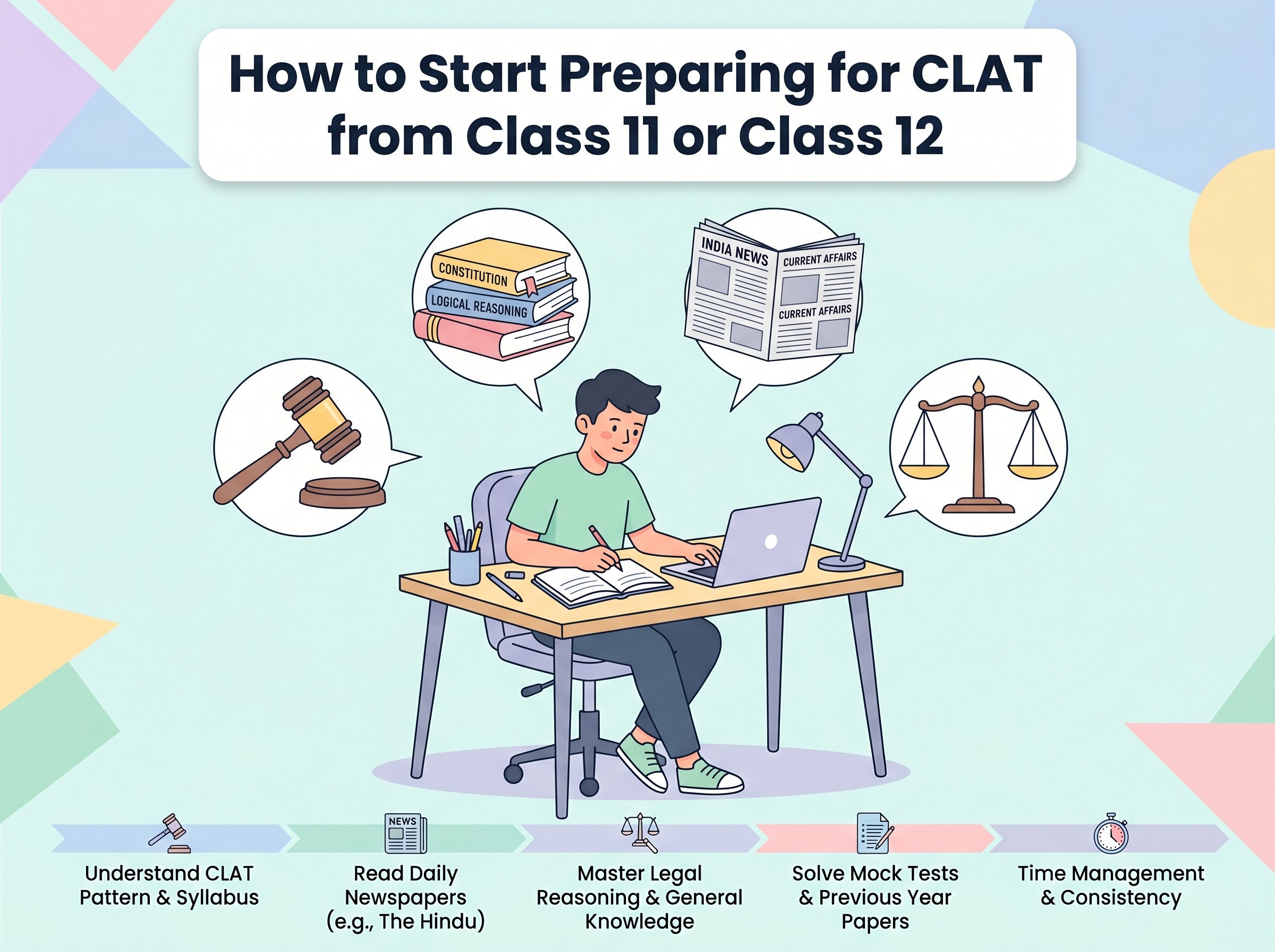
How to Start Preparing for CLAT from Class 11 or Class 12

The dream of entering a National Law University (NLU) often begins long before the final board exams. With the CLAT Exam becoming increasingly competitive and comprehension-heavy, the “early bird” advantage is real. Starting your CLAT preparation in Class 11 or 12 gives you the luxury of time—time to build reading stamina, master legal logic, and ace the clat entrance test without the last-minute panic.

In this guide, we break down the perfect roadmap for high school students to balance their school curriculum with the rigors of law entrance exams.

1. Why Start CLAT Preparation in Class 11?

Starting in Class 11 is the most strategic move an aspirant can make. Since the clat law exam is no longer about rote memorization, you need time to rewire your brain to think analytically.

  • Foundation Building: You have an entire year to slowly digest complex concepts in Legal Reasoning and Logical Reasoning.
  • Vocabulary Expansion: Building a “legal vocabulary” takes months of consistent reading, not weeks.
  • Stress Reduction: By the time you reach Class 12, you will already be ahead of 80% of the competition, allowing you to focus on boards and advanced mocks.

2. The Class 12 Balancing Act: Boards + CLAT

Most students fear that preparing for a clat course will ruin their board percentages. At CLAT Possible, we teach students how to integrate the two.

The “Parallel Study” Strategy:

  • The 80-20 Rule: During school months, dedicate 80% of your time to boards and 20% (roughly 2 hours a day) to CLAT.
  • Overlap Subjects: Use your English board prep to improve your reading speed. Use Humanities subjects (if applicable) to strengthen your Static GK for the clat entrance test.
  • The Sprint Phase: Once exams or boards are over or during summer/ winter breaks, switch to a high-intensity clat coaching schedule to bridge the gap.

3. Month-by-Month Roadmap for High Schoolers

Phase 1: The Reading Phase (Months 1-4)

Don’t rush into mocks. Spend the first few months reading The Hindu or The Indian Express editorials daily. Familiarize yourself with the “language of the law.”

Phase 2: Concept Mastery (Months 5-8)

Enroll in a structured clat course to understand the basics of Torts, Contracts, and Constitutional Law. Start solving sectional tests to identify your strengths and weaknesses. Start the momentum building of sitting and solving for at least 1-2 hours to build stamina for mocks. Practice from your material and continue reading 

Phase 3: The Mock Marathon (Months 9-12)

This is where you simulate the actual clat law exam environment. Take a minimum of one mock per week, analyze it thoroughly, and refine your time-management strategies. Slowly go up to 2-3 mocks a week

4. Why Professional Clat Coaching is a Game Changer

While self-study is commendable, the shifting patterns of law entrance exams require expert navigation. The clat best coaching in india—like CLAT Possible—provides:

  • Curated Content: You don’t have to waste time figuring out “what to study.”
  • Peer Competition: Studying with the brightest minds in the country keeps you motivated.
  • Strategy Sessions: Learning “how to skip a question” is as important as learning how to solve one.

5. Frequently Asked Questions (FAQs)

1. Is Class 11 a good time to start CLAT preparation?

Yes, Class 11 is the ideal time to start. It allows you to build a strong foundation in reading and critical thinking without the immediate pressure of Board Exams. Most toppers from the top NLUs start their journey in the 11th standard.

2. How should Class 12 students prepare for CLAT along with board exams?

The key is consistency over intensity. Dedicate 2 hours every weekday to CLAT preparation (focusing on GK and Newspaper reading) and 5–6 hours on weekends for Mock Tests and Legal Reasoning. During board practicals/exams, you can scale back, but never stop reading the news.

3. What habits should students build early for CLAT preparation?

  • Daily Reading: At least 45 minutes of a quality national newspaper.
  • Critical Thinking: Asking “why” and “how” when reading an opinion piece.
  • Note-making: Maintaining a concise diary for monthly Current Affairs and new legal maxims.

4. How many months of preparation are enough for CLAT?

While some crack it in 6 months, a 12 to 18-month preparation window is considered “safe” for securing a rank in the top 3 NLUs. This duration allows for multiple rounds of revision and at least 30–40 full-length mock tests.

Conclusion: Your NLU Journey Starts Now

Whether you are in Class 11 or 12, the CLAT Exam rewards those who show discipline and a hunger for knowledge. By starting early and utilizing the right CLAT Strategies for Students, you can ensure that your name appears on the first merit list of your dream NLU.

Are you ready to transform your potential into a Top Rank? [Explore CLAT Possible’s Foundation Courses for Class 11 & 12] and get mentored by the industry’s best!

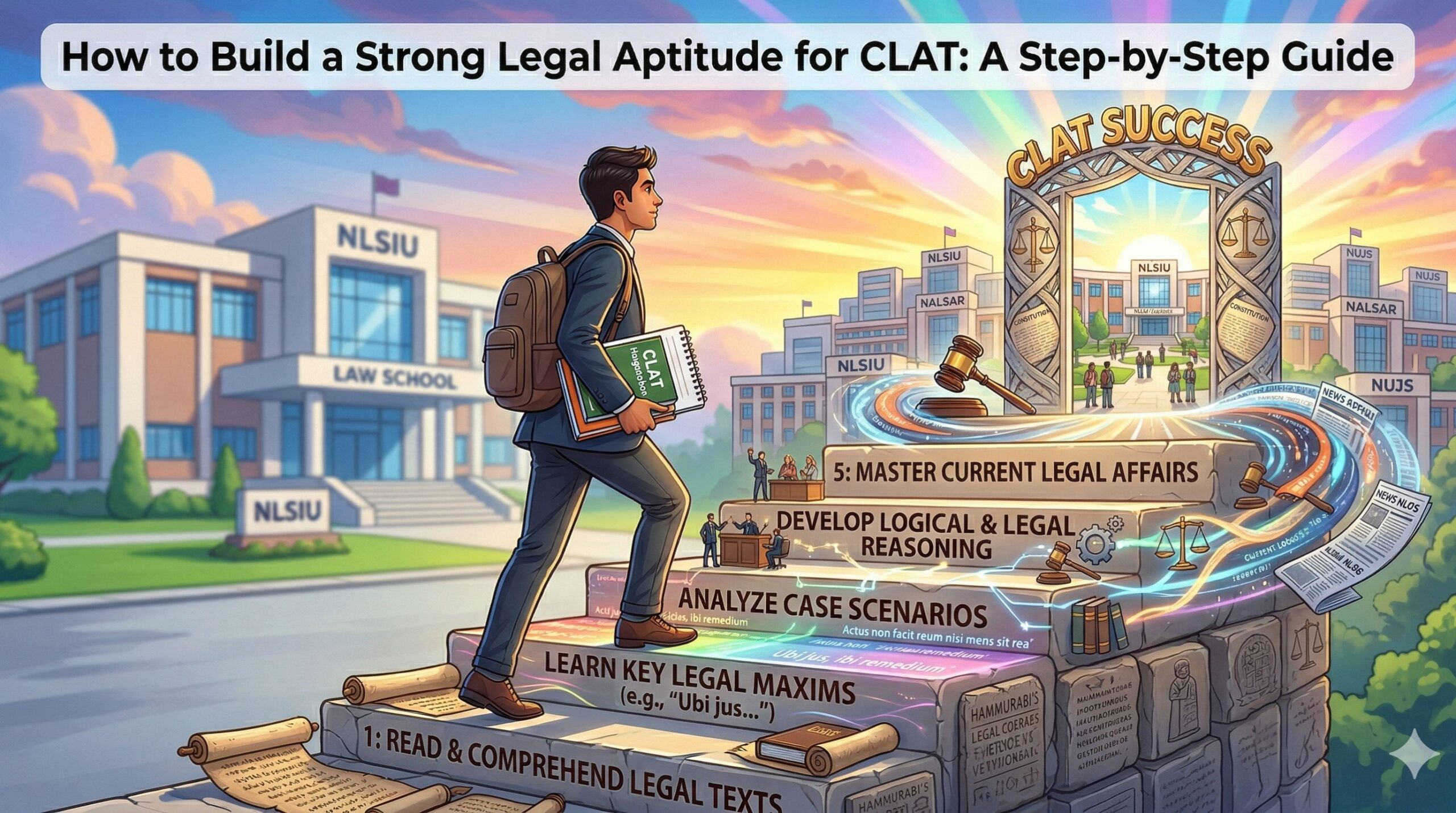
How to Build a Strong Legal Aptitude for CLAT: A Step-by-Step Guide

For any aspirant eyeing the National Law Universities, the Legal Reasoning section is the “heart and soul” of the CLAT Exam. Accounting for roughly 25% of the total marks, this section doesn’t just test your knowledge of laws; it tests your ability to think like a lawyer.

However, many students feel overwhelmed by legal jargon and complex statutes. In this guide, we break down how to master the CLAT entrance test by building a formidable legal aptitude from scratch, using proven CLAT Strategies for Students.

1. Understanding Legal Aptitude in the “New” CLAT

The CLAT law exam has undergone a massive shift. Gone are the days of simple Principle-Fact questions. Today, the exam presents you with 450-word passages based on contemporary legal issues, followed by a series of questions that require you to apply the logic of the passage to new factual scenarios.

To succeed in this law entrance exam, you must move beyond memorization and focus on Legal Logic.

2. The 4-Step Roadmap to Legal Mastery

Step 1: Master the Core Pillars of Law

While the CLAT Exam technically doesn’t require a law degree, having a foundation in core legal subjects helps you read passages faster. Focus your CLAT Preparation on:

  • Law of Torts: Understand negligence, vicarious liability, and strict liability.
  • Contract Law: Master offer, acceptance, consideration, and breach.
  • Criminal Law: Learn the difference between Mens Rea (guilty mind) and Actus Reus (guilty act).
  • Constitutional Law: Focus on Fundamental Rights, Directive Principles, and the powers of the Judiciary.

Step 2: Develop a “Neutral” Perspective

One of the most common mistakes in the CLAT law exam is letting your personal “moral compass” interfere with the legal principle.

  • Strategy: Even if a principle seems unfair, you must apply it strictly to the facts provided. In the courtroom of CLAT, the passage is the only law.

Step 3: Speed Reading and Comprehension

Since the CLAT entrance test is entirely passage-based, your legal aptitude is limited by your comprehension speed.

  • Action Plan: Read legal editorials from The Hindu or LiveLaw. Practice identifying the “ratio decidendi” (the reason for the decision) in summarized court judgments.
  • These will help you understand and get familiar with the language used in legal passages and build your comprehension speed.
  • DO NOT just read fast, try to comprehend the passage also. Else you will make mistakes in the tests.

Step 4: The Art of Eliminating Options

In the CLAT Exam, two options often look correct. Building aptitude means learning to spot the “distractor” options—those that are too broad, too narrow, or introduce facts not mentioned in the passage.

3. Advanced CLAT Strategies for Students

At CLAT Possible, we emphasize that legal aptitude is a muscle—it grows with resistance.

  1. Contextual Learning: When you hear about a new bill in the news (like the Bharatiya Nyaya Sanhita), don’t just read the headline. Look for the legal arguments for and against it.
  2. Mapping the Logic: When practicing, physically underline the “Rule” in the passage and the “Fact” in the question. Mentally draw a line connecting them.
  3. Time-Bound Practice: Never solve legal reasoning questions without a timer. Aim for 1 minute per question to mirror the pressure of the actual law entrance exam.

4. Frequently Asked Questions (FAQs)

1. What is legal aptitude in CLAT?

Legal aptitude is the ability to understand legal propositions (rules) and apply them to a set of facts to reach a logical conclusion. It evaluates your reasoning skills, attention to detail, and your ability to remain objective.

2. Do I need prior legal knowledge for CLAT legal reasoning?

Technically, no. The CLAT Exam provides all the necessary information within the passage. However, having a basic understanding of legal terminology and concepts (like ‘voidable contracts’ or ‘actionable claim’) significantly increases your reading speed and accuracy.

3. How can I improve my legal reasoning skills for CLAT?

The best way to improve is through “Active Analysis.” Don’t just check if your answer is right; read the explanation to understand why the other three options were wrong. Supplement this with CLAT Preparation modules that focus specifically on passage-based reasoning. Practice a lot and familiarize yourself with legal passages. 

4. Are previous year CLAT questions helpful for legal aptitude?

Absolutely. Previous year papers are the most authentic resource for any law entrance exam. They help you understand the “depth” of the questions asked and the specific logic used by the Consortium of NLUs.

Conclusion: Turning Aptitude into a Rank

Building a strong legal aptitude for the CLAT Exam is a marathon, not a sprint. It requires a shift in how you process information—from a passive reader to an active legal analyst. By following this step-by-step guide and staying consistent with your CLAT Preparation, the doors to your dream NLU will swing wide open.

Struggling with complex legal passages? [Join a Free Legal Reasoning Masterclass at CLAT Possible] and learn the ‘Zero-Error’ strategy from India’s top legal mentors!

Also Read:

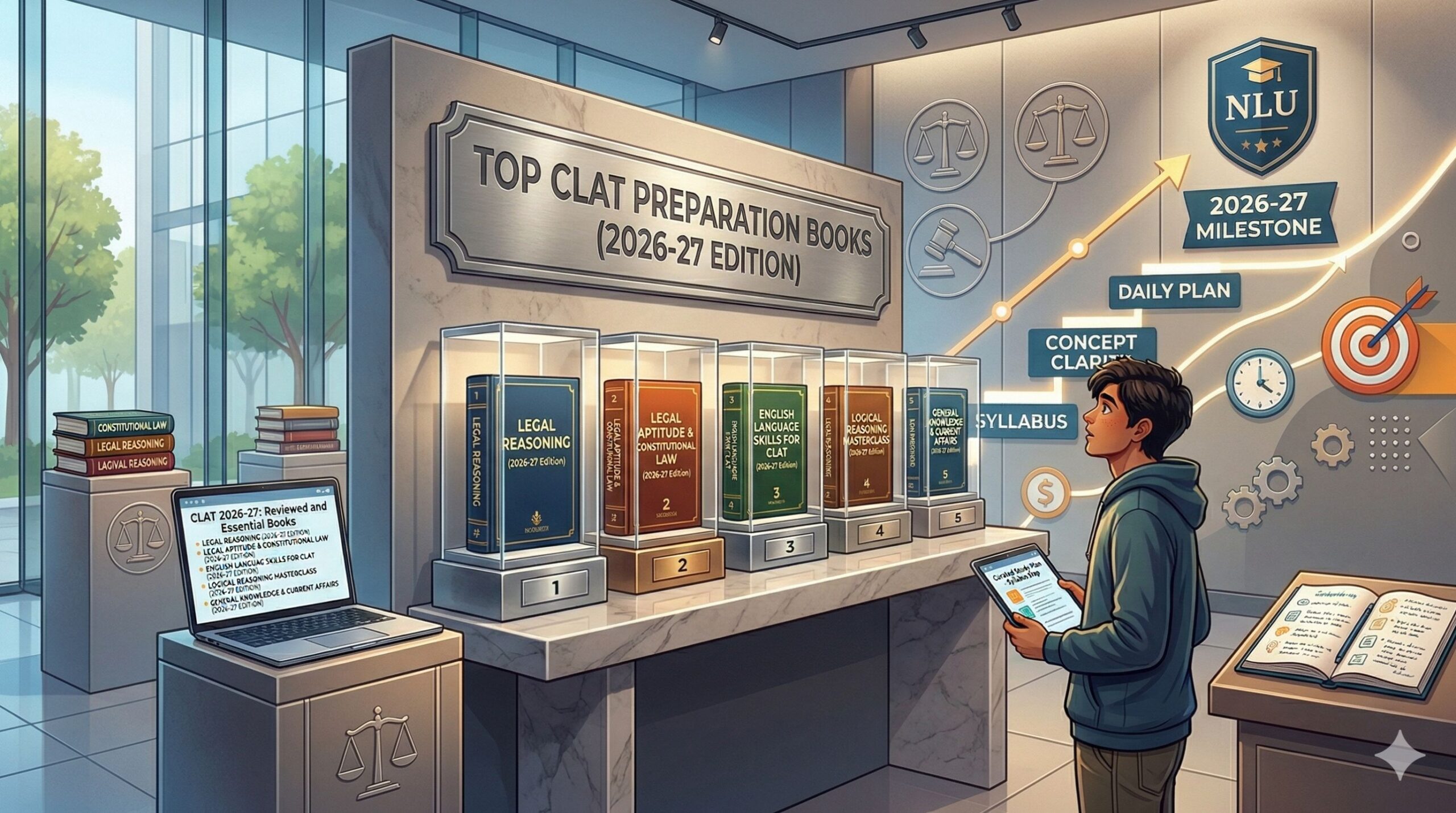
Top CLAT Preparation Books Every Aspirant Should Have (2026-27 Edition)

Securing a seat in a top-tier National Law University (NLU) is as much about the quality of your study material and resources as it is about your hard work. With the CLAT Exam evolving into a high-speed, comprehension-heavy marathon, relying on outdated materials can be a costly mistake.

To help you navigate the sea of study materials posing as clat expert material, we have curated the ultimate list of CLAT preparation books and resources. Whether you are looking for clat preparation online or seeking the clat best coaching in india, having these core texts on your desk is the first step toward success.

Why Choosing the Right Books Matters for CLAT 2026

The current pattern of Clat Exams requires you to read and process nearly 30 pages of text in 120 minutes. Your books shouldn’t just teach you the law; they should teach you how to read, analyze, and eliminate options under pressure.

Below is the section-wise list of must-have books for your 2026-27 journey.

1. English Language: Building Stamina & Vocabulary

Since every section in CLAT is now passage-based, your English skills are the foundation for the entire paper.

  • Cp’s Black Book of Vocabulary The gold standard for vocabulary. It uses a root-word approach that helps you decode difficult words in passages. Also it has a list of frequently asked words in the wordlist. The chapter on word clusters gives you words with their synonyms and antonyms. These help you get a command over learning new words in context.
  • Roznama (App) Daily Vocabulary: with Roznama you get 20 high frequency words that are most likely to come in exams along with with usage and quiz. Learn on the spot and test.
  • High School English Grammar and Composition by Wren & Martin: Essential for clearing up those tricky grammar concepts that appear in “error spotting” or “sentence correction” questions.
  • Editorials from The Hindu & Indian Express: Not a book, but arguably more important. Reading these daily is a core CLAT preparation habit to improve reading speed. In Roznama CP gives the day’s 5 editorial articles for practice and reading in case you missed the newspaper that day.

2. Legal Reasoning: The Heart of the Paper

This section tests your “legal mind.” You don’t need to be an expert in the Indian Penal Code, but you must understand how to apply rules.

  • CP’s Black Book of Legal Reasoning by Aakash Prasad: This is widely considered the best for understanding legal principles. It explain all the concepts of Constitution, Tort, COntracts in a student friendly manner that you not only understand but remember.
  • The EBC Guide to the CLAT by Clat Possible: Excellent for practice questions and conceptual clarity on Torts, Contracts, and Constitutional Law.
  • CLAT Possible’s Specialized Modules: Our internal modules are updated annually to include recent landmark judgments like the shift to the Bharatiya Nyaya Sanhita (BNS).

3. Logical Reasoning: Critical Thinking Mastery

CLAT has moved away from “puzzles” and toward “critical reasoning” (Assumptions, Conclusions, Strengthening/Weakening arguments).

  • CP’s Black Book of Critical reasoning: the ONLY book written for CLAT and AILET examination in the country. It has been authored by Clat Possible’s top CR mentors adapted to CLAT style passage based reasoning. The book explains the concepts of assumption, inference and main point along with syllogisms and then gives questions per chapter on both passages and small arguments for optimum practice.  Great for a wide variety of practice sets.
  1. Current Affairs & General Knowledge
  • Manorama Yearbook: Perfect for static GK and a year-end review of major events.
  • CLAT Possible’s Monthly GK Compendiums: In the world of clat preparation online, our monthly capsules are curated to filter out the noise and focus only on what’s relevant for the exam.

5. Quantitative Techniques: The DI Specialist

  • Quantitative Aptitude for Competitive Examinations by R.S. Aggarwal: Use this to build your base in percentages, ratios, and averages.
  • Fast Track Objective Arithmetic by Rajesh Verma: Useful for learning shortcuts that save precious seconds during the exam.

CLAT Strategies for Students: How to Use These Books

Having the books is one thing; using them effectively is another.

  1. Avoid Book Hoarding: Stick to one primary book per subject. Mastery over one source is better than being confused by five.
  2. Integrate Online Learning: Combine these texts with clat preparation online via webinars or recorded sessions to see how experts solve the same problems.
  3. Active Reading: When reading your English or Legal books, always keep a timer. Aim to finish a passage and its 5 questions in 6–8 minutes.

Frequently Asked Questions (FAQs)

1. Which books are best for CLAT preparation?

For a complete beginner, the “Big Three” are CP’s black Book of Critical Reasoning (Logic), CP’s Black Books (Legal), and Roznama  (daily mini CLAT for Current Affairs and all subjects). Combined with a reliable mock test series from the clat best coaching in india, these provide a rock-solid foundation.

2. Which book is best for CLAT legal aptitude?

CP’s Black Books for Legal Aptitude by Aakash Prasad is the most recommended. It effectively bridges the gap between static legal knowledge and the application-based reasoning required in the modern CLAT format.

3. Are NCERT books useful for CLAT?

NCERTs are useful for the Quantitative Techniques section (specifically Class 8-10 Math) to clear your basics. They are also helpful for Static GK (History and Geography), but they are not sufficient on their own for the comprehension-heavy English or Legal sections.

4. Should I focus more on books or mock tests for CLAT?

While books build your foundation, mock tests win you the rank. In the first 6 months, focus 70% on books and 30% on mocks. In the final 3 months, flip that ratio. Analysis of mocks is where the real learning happens.

Conclusion: Your Roadmap to NLU

Success in the CLAT Exam 2026-27 isn’t about reading everything—it’s about reading the right things fast. By combining these top-tier books with the structured guidance found at CLAT Possible, you can turn your NLU aspirations into reality.

Want to see how your preparation stacks up? [Download our Free CLAT 2026 Sample Mock Paper] and start your journey with CLAT Possible today!

Also Read:


CLAT Exam: All About Common Law Admission Test (The Definitive 2026-27 Guide)

The legal landscape in India is evolving, and at the heart of this transformation lies the CLAT Exam. As the one point gateway to the National Law Universities (NLUs), the Common Law Admission Test is a test of your analytical stamina, reading speed, and logical precision. This test other than being an entrance test also serves as a diagnostic test to check your acumen for a legal education.

Whether you are a high school student beginning your journey or a dropper looking for that final push, this guide covers everything you need to know about the exam, including the most effective CLAT strategies for students and how to choose the CLAT best coaching in India to achieve your NLU dream.

What is the CLAT Exam?

The Common Law Admission Test (CLAT) is a national-level entrance exam conducted by the Consortium of NLUs. It facilitates admissions into 5-year integrated LL.B. and 1-year LL.M. programmes. Since 2024, the exam has transitioned to a 120-question format from 200 questions in 2008  to 150 questions in 2020, emphasizing reading comprehension over rote learning.

CLAT Exam Overview:

  • Conducting Body: Consortium of National Law Universities.
  • Exam Mode: Offline (OMR-based).
  • Duration: 120 Minutes.
  • Marking Scheme: +1 for correct; -0.25 for incorrect.

Essential CLAT Preparation: A Sectional Breakdown

Mastering the CLAT Exams requires a balanced approach. Unlike traditional exams, you cannot “cram” for CLAT. Your CLAT preparation must focus on the following five pillars:

1. English Language (Comprehension-Based)

The English section tests your ability to derive meaning from 450-word passages. You must practice identifying the “Central Theme,” or main idea of the passage,  “Author’s Tone and Style of writing,” and “Inference based Meanings.”

2. Current Affairs & General Knowledge

This section is the ultimate time-saver. Focus on Legal Current Affairs, Supreme Court judgments, and international treaties. At CLAT Possible, we recommend daily newspaper analysis to stay ahead of the curve.

3. Legal Reasoning

You don’t need to be a lawyer yet, but you must apply facts like one. You will be provided with legal principles (e.g., Law of Torts, Contracts, or Criminal Law) and must apply them to a set of facts. There is no need to learn the CrPC or BNS. 

4. Logical Reasoning

This section evaluates your ability to analyze arguments. Focus on critical reasoning—specifically identifying assumptions, strengthening/weakening arguments, and concluding inferences based on premises.

5. Quantitative Techniques

Often the “rank-decider,” this section involves Data Interpretation (DI). Focus on 10th-grade arithmetic, including ratios, percentages, and averages applied to graphs and charts.

Why Choosing the CLAT Best Coaching in India Matters

With the level of competition rising every year, self-study often needs to be supplemented with expert mentorship. When searching for the CLAT best coaching in India, look for institutes that offer:

  • Battle-Tested Faculty: Teachers who have personally cracked these exams.
  • Personalized Mentorship: At CLAT Possible, we believe every student has a unique learning curve.
  • Mock Test Ecosystem: A robust test series that simulates the actual pressure of the 120-minute marathon.

Proven CLAT Strategies for Students

To secure a seat in the “Big Five” (NLSIU, NALSAR, WBNUJS, NLUJ, GNLU), follow these expert-vetted strategies:

  1. The ‘Passage-First’ Approach: Since 100% of the paper is passage-based, your reading speed is your greatest weapon. Aim for a speed of 250–300 words per minute with 90% retention.
  2. Daily Legal Updates: Follow the latest amendments and landmark cases. The CLAT Exam frequently features passages directly from recent legal controversies.
  3. Mock Analysis: Spending two hours on a mock test is useless unless you spend four hours analyzing it. Identify your “Time Sinks”—the questions that take too long and yield no marks.
  4. Consistency Over Intensity: 3 hours of focused daily prep is far better than a 12-hour weekend marathon.

Frequently Asked Questions for CLAT Exam (FAQs)

1. What is the full form of CLAT?

The full form of CLAT is the Common Law Admission Test.

2. Is CLAT difficult to crack?

While the syllabus is manageable, the difficulty lies in the time-to-question ratio. Cracking CLAT is about managing 120 questions in 120 minutes. With the right CLAT preparation and guidance from mentors, it is well within the reach of any determined student.

3. How many attempts are allowed for CLAT?

There is no limit on the number of attempts for the CLAT exam. Additionally, there is no upper age limit for the UG or PG programmes, allowing students to take the exam as many times as necessary to reach their desired NLU.

4. What rank is required to get into a top NLU?

To secure a seat in the top 3 National Law Universities, a General Category student typically needs an All India Rank (AIR) under 150. For the top 10 NLUs, you should aim for a rank within the top 800 to 1,000.

Conclusion: Start Your Journey Today

The CLAT Exam 2026-27 is a test of grit. Success belongs to those who start early and stay consistent. By utilizing the right CLAT strategies for students and enrolling in the CLAT best coaching in India, you can navigate the complexities of this exam with confidence.

Ready to kickstart your preparation? Join a FREE Demo Class at CLAT Possible today and learn from the mentors who have shaped thousands of NLU success stories!

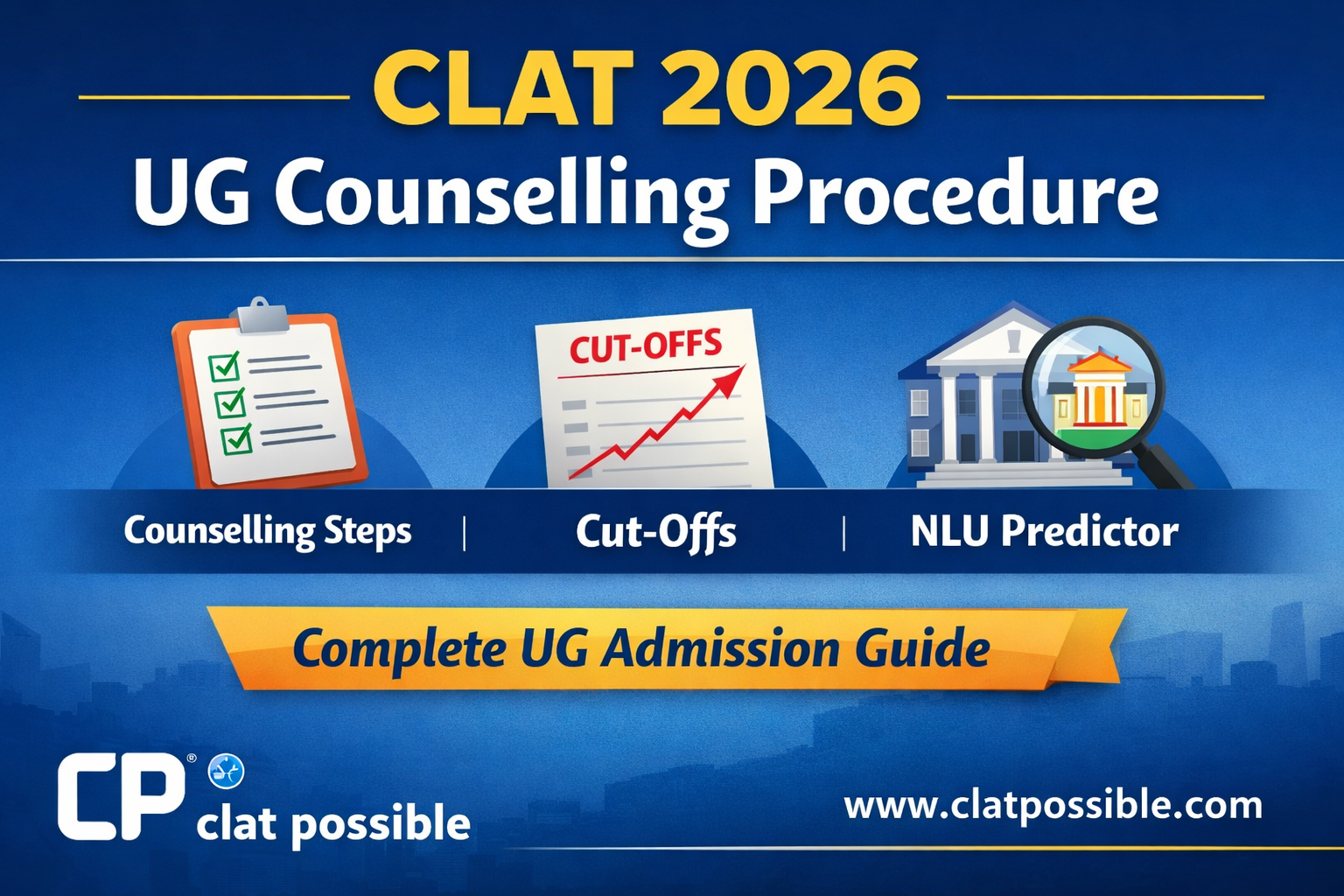
CLAT 2026 UG Counselling Procedure: Dates, Cut-Offs & Seat Allotment

CLAT 2026 UG Counselling Procedure – Complete Guide

This blog explains the complete CLAT 2026 UG counselling process, expected cut-offs, and how students can use an NLU Predictor tool to estimate their chances of admission.

1. What is CLAT UG Counselling?

CLAT UG counselling is a centralized admission process conducted for admission into 5-year integrated law programmes like BA LLB, BBA LLB, and BSc LLB offered by NLUs.

2. Step-by-Step CLAT 2026 UG Counselling Process

  • Register for counselling on the official CLAT portal and pay the counselling fee.
  • Verify personal, academic, and category details carefully.
  • Fill and arrange the NLU preference list in genuine order of choice.
  • Participate in multiple rounds of seat allotment.
  • Choose Freeze, Float, or Exit after seat allotment.
  • Complete document verification and admission fee payment.

3. CLAT UG Counselling Fee

General Category: ₹30,000
Reserved Categories: ₹20,000

4. Documents Required

  • CLAT Admit Card & Scorecard
  • Class 10 & 12 Certificates
  • Category Certificate (if applicable)
  • Domicile Certificate (if applicable)
  • Government Photo ID

5. Previous Year Cut-Offs (General Category – Top NLUs)

CLAT UG 2025 – Final Cut-Offs (All NLUs)

NLUGeneralEWSOBCSCST
NLSIU Bengaluru1–112119–703209–1541182–3133678–3396
NALSAR Hyderabad17–159372–546333–12191483–32731311–3621
WBNUJS Kolkata (BA LLB)57–3271359–41683048–47534823–6343
WBNUJS Kolkata (BSc LLB)299–7114168–45964244–69878994–9739
NLIU Bhopal (BA LLB)257–480787–13771658–17575077–57636166–8243
NLIU Bhopal (BSc LLB)486–9151338–19972217–24646764–862510384–11901
NLU Jodhpur159–367542–9861333–17763343–54454343–5955
HNLU Raipur480–8072156–24086232–76609746–10507
GNLU Gandhinagar236–444819–11181396–2303974–59344457–8568
GNLU Silvassa755–14611447–26202745–26208584–882612320–15112
NLUGeneralEWSOBCSCST
RMLNLU Lucknow461–7801327–20881064–37691832–1122819305–—
RGNUL Patiala565–12792067–86257540–12742
CNLU Patna (BA LLB)882–13981420–19501861–73597884–1266216829–—
CNLU Patna (BBA LLB)1215–15551928–23163106–836412269–1583327043–—
NUALS Kochi350–13464238–226329871–1502932306–—
NLU Odisha (BA LLB)469–10133196–72478920–12967
NLU Odisha (BBA LLB)552–11767630–789110921–15161
NUSRL Ranchi (BA/BBA)864–17601501–27141671–40968542–990210015–15023
NLUJA Assam1163–21413740–1870110753–402754020–264138513–39689
DSNLU Visakhapatnam957–16821506–25712472–38138198–933013506–15632
NLUGeneralEWSOBCSCST
TNNLU Tiruchirappalli (BA/BCom)1231–19472045–49876291–1247014211–15384
MNLU Mumbai443–14732524–75234161–80677180–1562210288–13124
MNLU Nagpur (BA/BBA)722–16237863–198462230–1679413180–2661941775–19846
MNLU Aurangabad (BA/BBA)1023–23938244–2320311062–211087378–3165255196–23203
HPNLU Shimla (BA/BBA)949–26348641–1388613499–19910
MPDNLU Jabalpur1371–22431935–27692677–344510083–1255616830–23145
DBRANLU Sonipat503–20501887–26872173–42107991–1280212630–19973
NLUT Agartala1716–224329955–4919725887–—
RPNLU Prayagraj1446–24692636–37263454–555912017–21354–25839
IIULER Goa (BA/BBA)1198–28322446–37512721–58926774–1486711093–22260


CLAT UG 2024 – Final Cut-Offs (All NLUs)


NLUGeneralEWSOBCSCST
NLSIU Bengaluru1–102122–523151–971372–3007239–7487
NALSAR Hyderabad6–167175–564189–11161604–3574263–6083
WBNUJS Kolkata (BA LLB)140–2792610–231922056–45035215–8860
WBNUJS Kolkata (BSc LLB)289–10107619–269864663–895810961–11917
NLIU Bhopal (BA LLB)311–450621–13761191–13154573–51788403–11527
NLIU Bhopal (BSc LLB)187–10471248–17771112–19596497–762213905–15219
NLU Jodhpur170–3791079–14243574–51786666–8960
HNLU Raipur434–7911841–20693408–6765
GNLU Gandhinagar210–464603–12481284–18584584–61757712–11580


NLUGeneralEWSOBCSCST
GNLU Silvassa593–10601113–19352225–24298833–1073511291–—
RMLNLU Lucknow410–7641022–23261170–36135397–1034020456–34174
RGNUL Patiala502–12503234–102539562–16875
CNLU Patna (BA LLB)790–13581378–21222139–27764522–1486423802–—
CNLU Patna (BBA LLB)1051–15521571–27032560–414713550–16714
NUALS Kochi231–11366867–1492212306–1524513117–—
NLU Odisha (BA/BBA)591–12055997–—
NUSRL Ranchi637–1594
NLUJA Assam1344–1704
DSNLU Visakhapatnam656–1390
NLUGeneralEWSOBCSCST
TNNLU Tiruchirappalli (BA/BCom)806–1711
MNLU Mumbai547–590
MNLU Nagpur (BA/BBA)491–1685
MNLU Aurangabad (BA/BBA)681–1832
HPNLU Shimla (BA/BBA)284–2150
MPDNLU Jabalpur1060–1824
DBRANLU Sonipat503–2050
NLUT Agartala1716–2243
RPNLU Prayagraj1446–2469
IIULER Goa (BA/BBA)1198–2832

6. Common Mistakes to Avoid

  • Missing counselling deadlines
  • Filling too few NLU preferences
  • Incorrect category selection
  • Misunderstanding Freeze vs Float option

AILET 2026 Answer Key – Download Official PDF

The AILET 2026 Answer Key is one of the most awaited documents for law aspirants who appeared for the All India Law Entrance Test (AILET) 2026, conducted by National Law University (NLU), Delhi. The answer key allows candidates to verify their responses, estimate their scores, and assess their chances of securing admission to NLU Delhi.

How to Download the AILET 2026 Answer Key

You can download Provisional Answer key from Clat Possible Here.

Once released, you can download the official answer key (PDF) from the NLU Delhi website:

Go to: nationallawuniversitydelhi.in

Navigate to the Notifications / AILET section.

Look for links titled:

AILET 2026 Provisional Answer Key

AILET 2026 Final Answer Key

AILET 2026 Exam Analysis : Paper Pattern, Difficulty Level & Cutoff

Exam Name: AILET 2026 (All India Law Entrance Test)

Conducting Authority: National Law University, Delhi (NLU Delhi)

Course: BA LLB (Hons) & LLM

Exam Mode: Offline (Pen & Paper)

Exam Overview

Expert Analysis of AILET 2026


150 questions – separate sections for English and CR and GK

    1. 2 hours
    2. 3 sections – English, Logical Reasoning, GK
    3. English – 50 questions over 6 passages
    4. GK – 30 questions standard non passage based
    5. Logical Reasoning – 70 questions from CR, AR (10) and Legal (4)
Break -UP Of Marks
SectionSubjectQuestion. No.Marks
Part- 1,

Section – A

English1-5050
Part – 1,

Section – B

Logical Reasoning81- 15070
Part – 2Current Affairs and General Knowledge51-8030
Total marks150

Overall Analysis

1.Paper was reasonably lengthy with only passages in English.
2.Style of the questions traditional. No radical changes like 2023 this time
3.Overall question level was easy.
4.Cut off is expected to be higher or equal to last year.
5.GK was direct with mixed questions consisting of Current Affairs and Static GK
6.Higher accuracy is needed to clear to make the cut.
Passage Topics

All genres of reading touched upon

1.Democracy
2.AI
3.Urban gardening
4.Social Media
5.Comparative Essays on Law and Ethics
6.Story
Section : English
Level of Difficulty Overall
S.N.Types of QuestionsQuestionsLevel of Difficulty
1.Fact Based23Easy to Moderate
2.Inference3-4Easy
3.Main idea and main Idea like7 – 10
4.Strengthen And Weaken2Easy
5.Assumption2Easy
6.Assertion Reason6Moderate
7.Inferential Vocabulary6-7Easy to Moderate

Total Questions : 50

VERY GOOD SCORE : 42 -45

•Several logical reasoning based Questions though easy
• Most questions required a minute’s reading
•Vocabulary based questions were completely knowledge based
Section: General Knowledge
Level of Difficulty Overall
S.N.Types of QuestionsQuestionsLevel of Difficulty
1.Sports (IPL, Wimbledon)2Easy
2.Art & Culture3Moderate – Difficult
3.Geography2Moderate
4.Indian Polity1Moderate – Difficult
5.Science and Tech8Moderate – Difficult
6.Days1Easy
7.Awards5Easy – Moderate
8.Space0
9.Defence2Easy
10.Miscellaneous2Moderate
11.International Relations4Very Easy

TOTAL 30 QUESTIONS (Part 2 of the paper, Questions from 51 to 80):

GOOD SCORE: 17-19

If you’re getting 20+, then you have done an Excellent Job.

A typical AILET GK Section with combination of Current Affairs + Static GK questions

Total questions = 30

Current Affairs = 18 including 3-4 questions which are contemporary, but ranging beyond one year.

Static GK = 12

Questions were a mix of national events/international events/sports etc.

Many questions from the background or context of the current affairs events were asked.

Overall level of difficulty of GK section = Easy to Moderate

Good Attempts = 20-22 questions out of total 30 GK questions

Good Score = 17-19

Section: Logical Reasoning

Level of Difficulty Overall: Easy to Moderate
S.N.Types of QuestionsQuestionsLevel of Difficulty
1.Analytical Reasoning7
CR55Easy to Moderate
Word analogy2Moderate
Legal4Easy to Moderate


S.N.Types of Questions
2.Critical Reasoning
A. Inference
B. Strengthen
C. Weaken
D. Assumption
E. Syllogisms and Conditionlas

Critical Reasoning : TOTAL 70 QUESTIONS

GOOD SCORE: 57-58

Cut Off: 50-52

Reading the passage and comprehending it has assumed critical importance.

Only some of the questions could have been attempted without a thorough reading of the passage.


Expected Cutoffs

SectionNo. of QuestionsGood ScoreLevel of Difficulty
English5140-45Easy to Moderate
Current Awareness3016-18Moderate to Difficult
Logical Reasoning7(AR) + 55(CR)57-60Easy to moderate
Total150113-123Easy -Moderate

The AILET 2026 exam is one of the most competitive law entrance exams in India, conducted exclusively for admission to NLU Delhi. As the exam approaches, aspirants are actively searching for a reliable AILET 2026 exam analysis to understand the expected paper pattern, difficulty level, important sections, and scoring strategy.

This exam AILET 2026 analysis is designed to help aspirants prepare smartly and also serves as an early-indexed resource for accurate post-exam updates.


First Impressions of AILET 2026

Expert Analysis of AILET 2026


All the best for AILET 2026! 🎓

Total Seats in NLUs for CLAT 2026: UG & PG (All Categories)

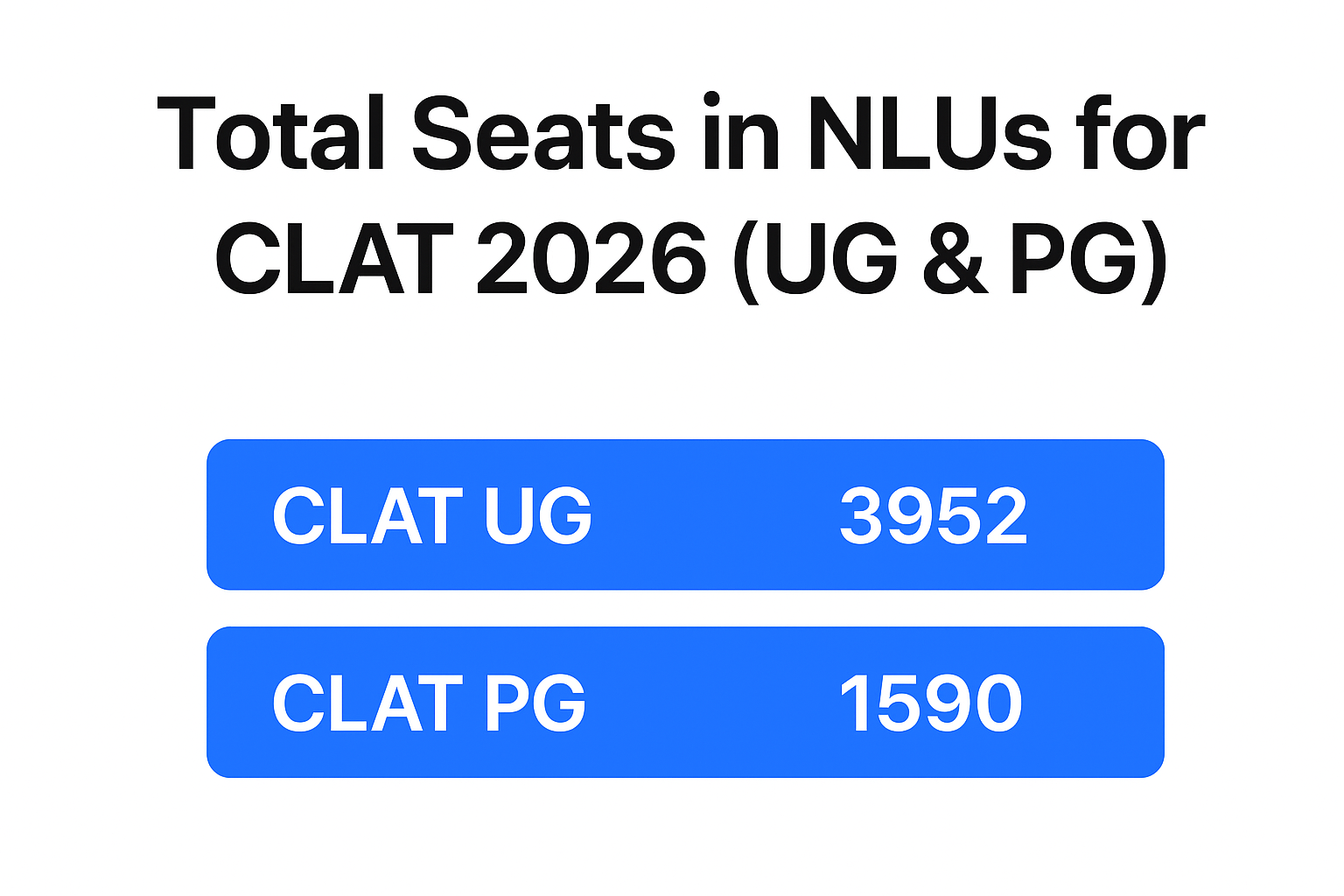
The total seats in NLUs for CLAT 2026 are 3,952 for five-year UG programmes and 1,590 for PG (LLM) programmes. Below you’ll find the full seat matrix (UG & PG), general-category breakdown, top and smaller NLUs by intake, and practical tips on how seat distribution affects cut-offs and counselling choices.

At a glance

ProgrammeTotal NLU Seats
CLAT UG (5-year)3952
CLAT PG (LLM)1590

NLU Seats in CLAT UG 2026 (All NLUs)

Total UG Seats = 3952

NLU NameUG Seats
NLSIU Bangalore310
NALSAR Hyderabad132
NLIU Bhopal202
NUJS Kolkata182
NLU Jodhpur196
HNLU Raipur180
GNLU Gandhinagar172
GNLU Silvassa66
RMLNLU Lucknow191
RGNUL Punjab180
CNLU Patna138
NUALS Kochi60
NLUO Odisha180
NUSRL Ranchi201
NLUJA Assam120
DSNLU Visakhapatnam132
TNNLU Tiruchirappalli120
MNLU Mumbai100
MNLU Nagpur240
MNLU Aurangabad120
HPNLU Shimla180
DNLU Jabalpur120
DBRANLU Haryana120
NLUT Agartala60
RPNLUP Prayagraj60
IIULER Goa180

NLU Seats for CLAT PG 2026 (LLM)

Total PG Seats = 1590

NLU NamePG Seats
NLSIU Bangalore60
NALSAR Hyderabad66
NLIU Bhopal60
NUJS Kolkata100
NLU Jodhpur88
HNLU Raipur90
GNLU Gandhinagar57
GNLU Silvassa33
RMLNLU Lucknow55
RGNUL Punjab80
CNLU Patna66
NUALS Kochi60
NLU Odisha50
NUSRL Ranchi69
NLUJA Assam40
DSNLU Visakhapatnam66
TNNLU Tiruchirappalli60
MNLU Mumbai50
MNLU Nagpur60
MNLU Aurangabad60
HPNLU Shimla80
DNLU Jabalpur60
DBRANLU Haryana60
NLUT Agartala50
RPNLUP Prayagraj10
IIULER Goa60

General Category Seats (UG & PG)

General category seats — UG: 1752, PG: 723

NLUGeneral UGGeneral PG
NLSIU Bangalore12124
NALSAR Hyderabad6633
NLIU Bhopal7830
NUJS Kolkata9967
NLU Jodhpur8541
HNLU Raipur9145
GNLU Gandhinagar7926
GNLU Silvassa3116
RMLNLU Lucknow8020
RGNUL Punjab13460
CNLU Patna5626
NUALS Kochi2020
NLU Odisha12834
NUSRL Ranchi9030
NLUJA Assam6020
DSNLU Visakhapatnam5527
TNNLU Tiruchirappalli3418
MNLU Mumbai2712
MNLU Nagpur5117
MNLU Aurangabad3417
HPNLU Shimla13846
DNLU Jabalpur6030
DBRANLU Haryana4020
NLUT Agartala3125
RPNLUP Prayagraj244
IIULER Goa4015

Top takeaways

  • Top NLUs commonly have 180–310 UG seats; NLSIU leads with 310 UG seats.
  • General seats form ~44% of total intake — domicile and reserved categories take the rest.
  • PG competition is intense — top NLUs offer the majority of LLM seats.

Quick links

CLAT Result 2026
CLAT Cut Off 2026
CLAT Counselling 2026

Top 10 NLUs (Highest total seats)

NLUUGPGTotal
NLSIU Bangalore31060370
MNLU Nagpur24060300
NLIU Bhopal20260262
NUSRL Ranchi20169270
NLU Jodhpur19688284
RMLNLU Lucknow19155246
NUJS Kolkata182100282
RGNUL Punjab18080260
HNLU Raipur18090270
IIULER Goa18060240

NLUs with the fewest total seats

NLUUGPGTotal
RPNLUP Prayagraj601070
NUALS Kochi6060120
NLUT Agartala6050110
MNLU Mumbai10050150
GNLU Silvassa663399

Tips for Aspirants Targeting Top NLU Seats

  1. Focus on rank requirements over seat count: High-seat NLUs still close at top ranks due to reputation and placements.
  2. Prioritise long-term ROI: Look at placement consistency, internships, and alumni network.
  3. Consider newer NLUs: Smaller batches can have rapidly improving records and opportunities.
  4. Study course structure & faculty: A specialised faculty can be decisive for certain law careers.
  5. Factor in domicile quotas: Many NLUs reserve a significant share for state domicile candidates — this affects All-India seats.

FAQs — CLAT 2026 Total Seats

How many total UG seats are there in NLUs?

Across all NLUs participating in CLAT, there are 3952 UG seats for the 5-year programme.

How many PG seats are there in NLUs?

NLUs offer a combined 1590 LLM seats (1-year & 2-year).

Do all NLUs offer BA LLB?

Yes — the flagship BA LLB (Hons.) is offered by all NLUs. Some also run BBA LLB, BCom LLB, or BSc LLB.

How many NLUs accept CLAT?

27 NLUs accept CLAT scores for UG/PG admissions. NLU Delhi conducts AILET separately.

Do NLUs have management quotas?

No. NLUs do not have any management quota; most seats are filled through CLAT, AILET, or NRI/Foreign national routes.

For detailed cut-offs, counselling dates, and rank-to-marks mapping, check our other resources: CLAT Cut Off 2026, CLAT Counselling 2026, CLAT Marks vs Rank.

CLAT Answer Key 2026 : Download PDF

The CLAT 2026 Answer key  is published on 7th Dec 2025 after the CLAT 2026 exam. You will find the complete CLAT  answer key solved by our mentors, and the original Answer key provided by the CLAT Consortium.

These key will help  you in calculate the estimated score and predict your rank. We will update all information related with CLAT 2026 answer key here.

The CLAT Possible Answer Key for CLAT 2026 is now available for students who appeared for the exam. Our academic team has analysed the entire paper, verified the solutions, and prepared the most reliable set-wise answer key to help you accurately calculate your expected score.


CLAT Possible has been India’s trusted CLAT preparation institute for over a decade, and our post-exam answer key is known for its accuracy, clarity, and detailed analysis.


CLAT 2026 Paper Analysis: First Impressions, Difficulty Level, Good Attempts & Expected Cutoff

The Common Law Admission Test (CLAT) 2026 has concluded, and aspirants across the country are buzzing with reactions. To help students, parents, and teachers understand the exam better, we have compiled a detailed CLAT 2026 paper analysis, including first impressions, section-wise difficulty, key takeaways, surprises, good attempts, and expected cutoff trends.

CLAT 2026: First Impressions

Based on feedback from students and experts, CLAT 2026 was:

  • Paper was lengthy. Attempt could have been 110+ for good score and overall 104+
  • Overall paper was easy to moderate.
  • Tricky questions that were there in spurts in different sections will decide ranks
  • Cut off is expected to be in and around or even more than last year.
  • Good general awareness was key
  • CR did the missing act!! So much for a reading based paper!!

Students found the paper doable but lengthy, making time management the biggest challenge.

🔹 Overall Difficulty Level (Section-wise)

Section Difficulty Key Highlights

English Easy Central Idea based Questions,Meaning in Contex,2 figure of speech, very few inference and Rc based Question

Current Affairs & GK Easy to Moderate US Policies, H1B, MAGA, Tariffs,⁠⁠Chess, Grandmaster, Chess Champion First, AI, WC, ⁠⁠Pahalgam, Indus, SAARC, ⁠⁠SCO, Tianjin, Chabahar, ⁠⁠Air India Crash

Quantitative Techniques Easy to Moderate 2 set, 6 Questions each, All Passage based, no visual data,One Set Super easy and one Set Calculations Heavy

Logical Reasoning Moderate Complete Surprise was that 18 Questions came from AR and only 7 Questions came from Critical Reasoning.Critical Reasoning 28% (7 Questions),Analytical Reasoning 72% (18 Questions),1 Question Incorrect in Blood Relations / Symbols

Legal Reasoning Moderate to Difficult Lengthy passages, high reading load


🔹 Section-Wise CLAT 2026 Analysis

1. English Language

Total Questions: 24
Good Score: 21.5
Overall – 18+

2. Current Affairs & General Knowledge

Total Questions: 28
Good Score: 23
Cut-Off Score: 18
4 out of 5 Easy and Direct Passages
1-2 Questions from Passage

3. Quantitative Techniques

Total Questions: 12
Good Score: 8
Cut-Off Score: 5
2 sets – 6 Questions each
All Passage Based; No Visual Data (Graphs/Charts): Just Like Last Year: Very Doable
One Set – Super Easy and One Set – Calculation Heavy
Based on Ratios and Percentage Based

4. Logical Reasoning


Total Questions: 25

Good Score: 18


Cut-Off Score: 14

Patience was the key. Complete Surprise was that 18 Questions came from AR and only 7 Questions came from Critical Reasoning.

Critical Reasoning 28% (7 Questions)

Analytical Reasoning 72% (18 Questions)

1 Question Incorrect in Blood Relations / Symbols


5. Legal Reasoning

Total Questions: 30

Good Score: 25

Cut-Off Score: 20

Passage 1: One Nation Policy; One Nation, One Election

Passage 2: Constitution; Preamble

Passage 3: Constitution; Good Governance; Manoj Narula v. UoI

Passage 4: Governor’s Assent to Bills (TN Case)

Passage 5: Same Sex Marriage; Legal Status

🔹 Expected CLAT 2026 Cutoff (Predicted)

SectionNo. of QuestionsCut off Score (top 3)Level of Difficulty
English 2421Easy
Current Affairs2823Easy to Moderate
Data Interpretation128Easy – Moderate
Logical Reasoning24 18Easy – Moderate
Legal Reasoning3125Easy – Moderate
Total12095 – 100

(For General Category)

CATEGORYTOP 3OVERALL

(ANY NLU)

GENERAL95-10077-82


This may vary based on final answer key and difficulty normalization.

🔹 Key Takeaways from CLAT 2026

Balanced paper with moderate difficulty

Heavy reliance on comprehension & reasoning

Few surprises but no drastic pattern shift

Time management determined final accuracy

Cutoffs expected to be slightly higher than last year

🔹 Student Reactions: What Aspirants Said

Many found Legal and Quant the most time-consuming

GK was a relief—straightforward and current affairs heavy

Majority rated paper as moderate but lengthy

Most candidates attempted 105–118 questions

🔹 What Next? Post-CLAT Strategy

Students should now:

Calculate expected scores using answer keys

Explore NLU counselling prep

Keep an eye on CLAT Consortium notifications

Start preparing for backup exams (AILET, SLAT, MHCET Law, etc.)

📌 About Clat Possible

Clat Possible is India’s leading law entrance preparation institute, known for delivering top ranks, expert faculty, structured courses, and high-quality analysis.
We guide thousands of aspirants every year towards their dream NLUs with expert mentorship and personalized learning.

counselling spot

This expert review will help you assess your performance and estimate your chances of securing a top NLU.